
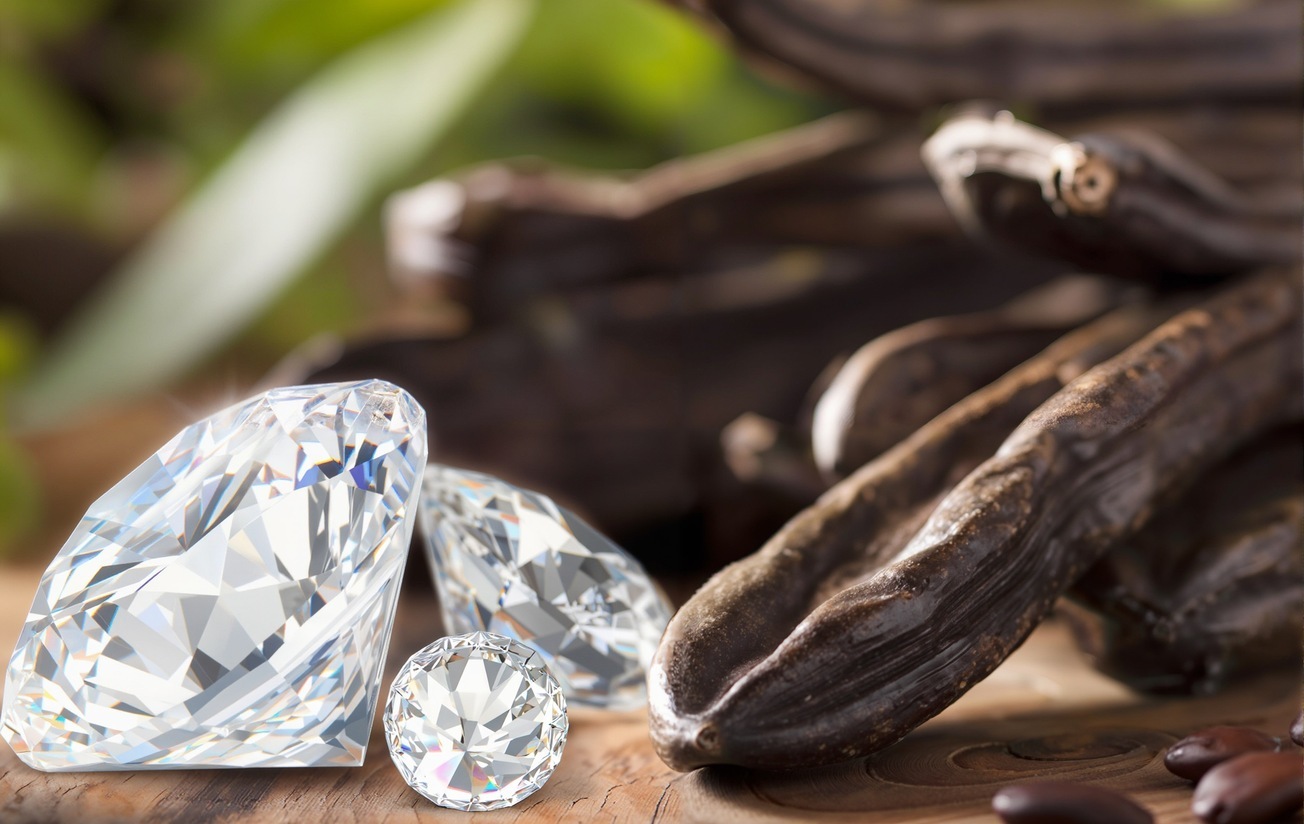
Carat: A Small Unit of Great Value
The carat is a unit of mass used to measure gemstones, determining not only their weight but also their prestige and market value. Few realize that the word carat has roots in ancient times. Today, this unit is essential to the world of fine jewelry.
But how much does a carat actually weigh in grams? What does a one-carat diamond look like to the naked eye? And how does a gold carat differ from a diamond carat? Let’s take a closer look.
The History of the Carat: From Antiquity to the Modern Era
The word carat derives from the Greek kerátion (κεράτιον), a diminutive of kéras (κέρας), meaning “horn”. Historically, however, the term is linked to the carob tree (Ceratonia siliqua), whose curved seed pods resembled animal horns.
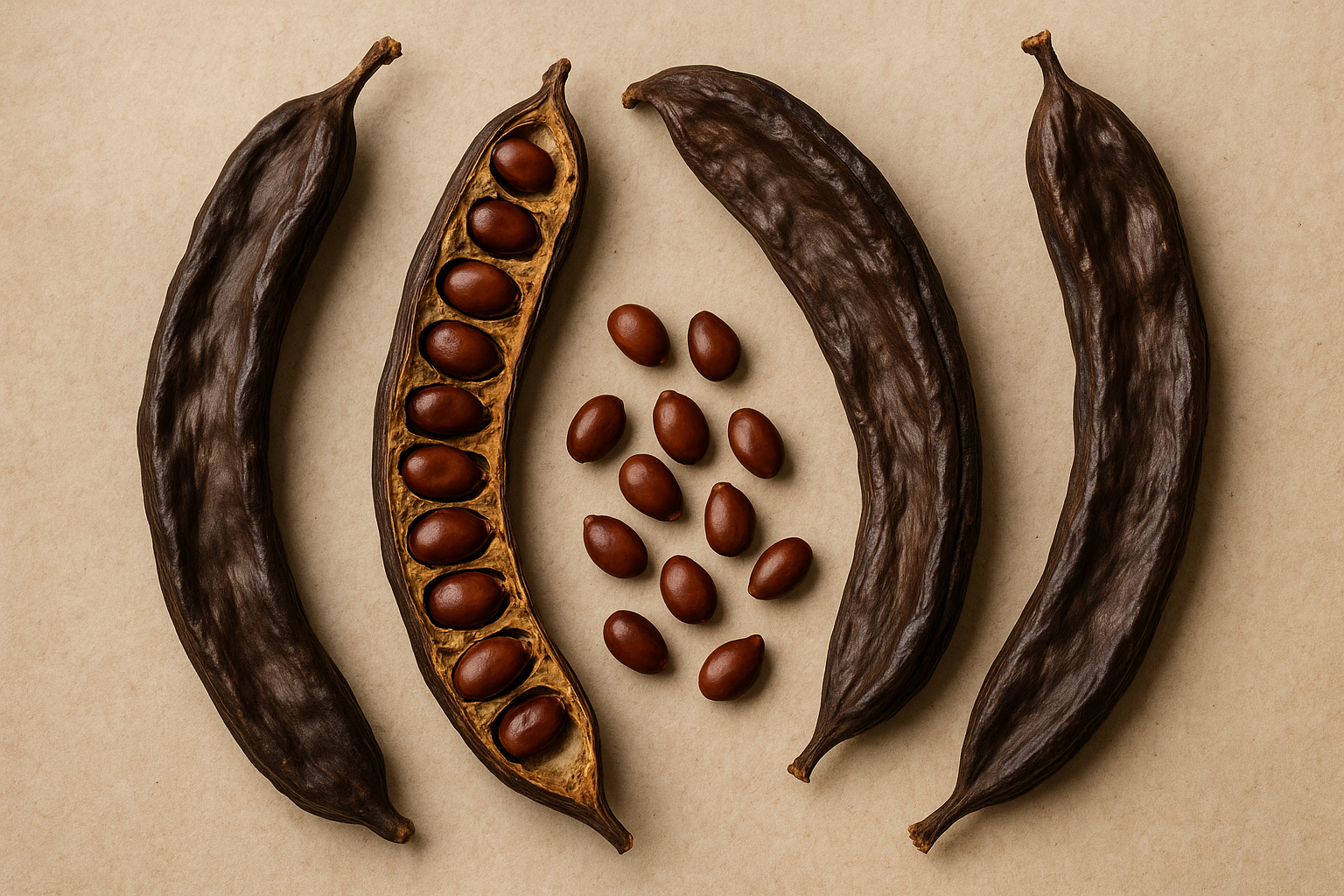
Ancient merchants observed that carob seeds had an almost uniform weight — approximately 0.2 grams with minimal variation. This unique consistency made them a natural standard for weighing gemstones. In this way, the humble carob seed laid the foundation for gemological metrology, and the carat became a lasting symbol of precision over millennia.
Over time, during the Middle Ages, jewelers across different regions began facing a challenge: despite their remarkable uniformity, carob seeds still had slight but significant weight discrepancies. In Genoa, Italian merchants worked with “heavy” carats of up to 0.22 grams, while Arab traders in Alexandria used lighter standards, around 0.18 grams. In high-value transactions, even a 0.04-gram difference in a 10-carat diamond could translate into a 0.4-gram shortfall — an amount with serious financial implications.
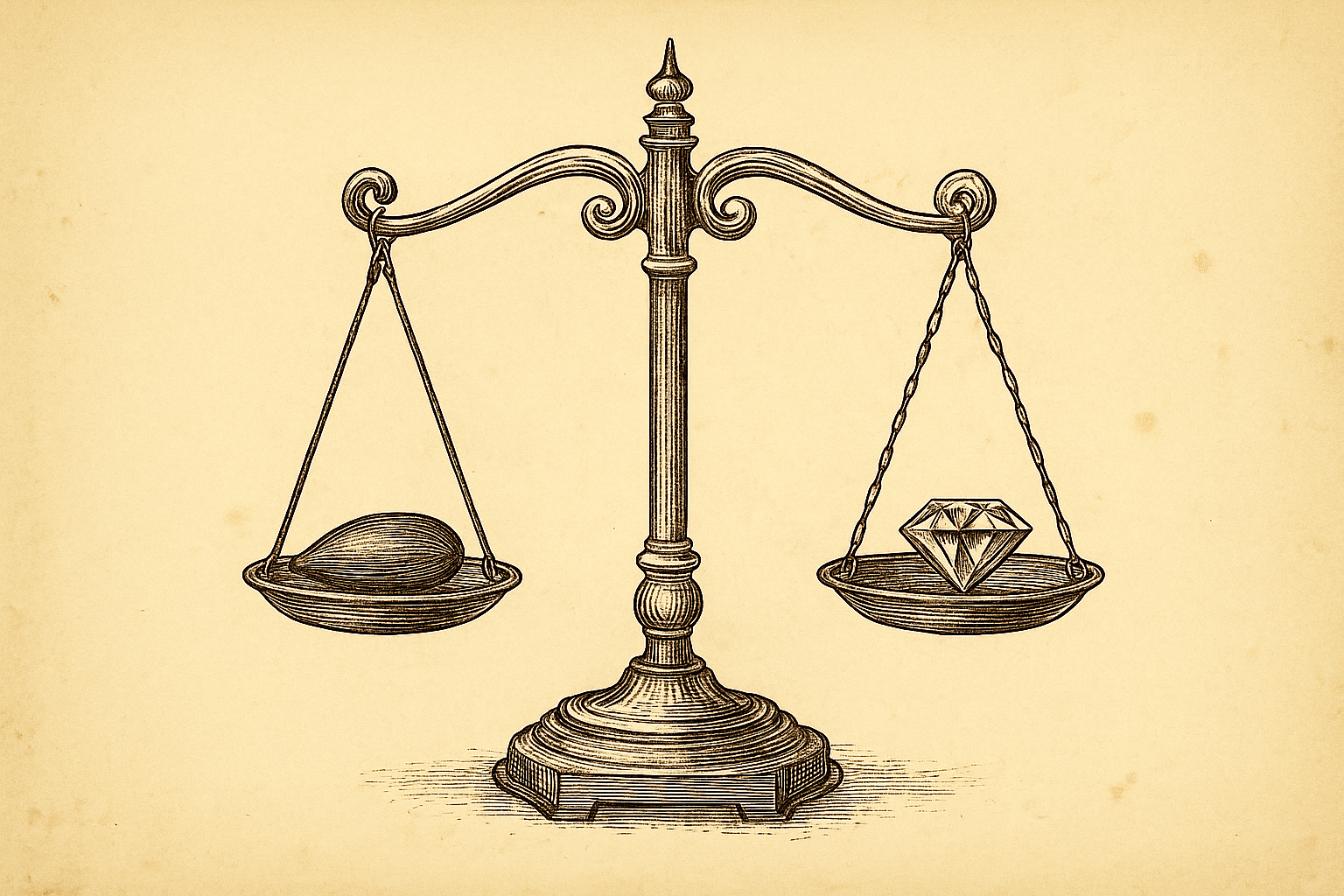
The issue became particularly acute in the 17th and 18th centuries, when the volume of the gemstone trade increased dramatically. By 1871, no fewer than 47 different national carat standards were on display at the Paris Exposition. In response, French jewelers compiled a comparative table with conversion coefficients between the “Florentine,” “Venetian,” and “Istanbul” carats.
The situation changed only in 1907, when the 4th General Conference on Weights and Measures in Paris established the unified metric carat, defined as exactly 200 milligrams (0.2 grams) [1]. This decision:
- eliminated regional discrepancies,
- reinforced the use of the decimal system,
- preserved the connection to a natural reference while eliminating its inconsistencies.

Interestingly, the transition to the new standard took more than 20 years. In the USSR, the metric carat was officially adopted as the standard unit for weighing gemstones in 1922. Since then, the formula — 1 carat = 200 mg — has become a universal language for jewelers, gemologists, and collectors around the world.
How Carats Are Measured in the Jewelry Industry
The methods used to measure gemstone weight have come a long way — from carob seeds to modern electronic scales. Today, when a difference of just 0.01 carat can mean thousands of dollars, professionals rely on a wide range of high-precision instruments.
Several types of scales are commonly used when working with diamonds:
- High-precision analytical balances — Used in leading certification laboratories such as GIA, IGI, and HRD. These instruments offer accuracy down to 0.0001 grams (0.0005 ct) and are calibrated according to international standards. They are operated in environments with controlled temperature, humidity, and full vibration isolation.
- Jeweler’s scales with 0.001-gram precision — Commonly found in large retail stores and used by independent gemologists. These reliable, professional-grade tools provide accuracy up to 0.005 carats and are well suited for everyday use.
- Compact digital showroom scales — Budget-friendly models accurate to 0.01 grams (0.05 ct). While useful for rough estimates, they are not suitable for certification or precise valuation.
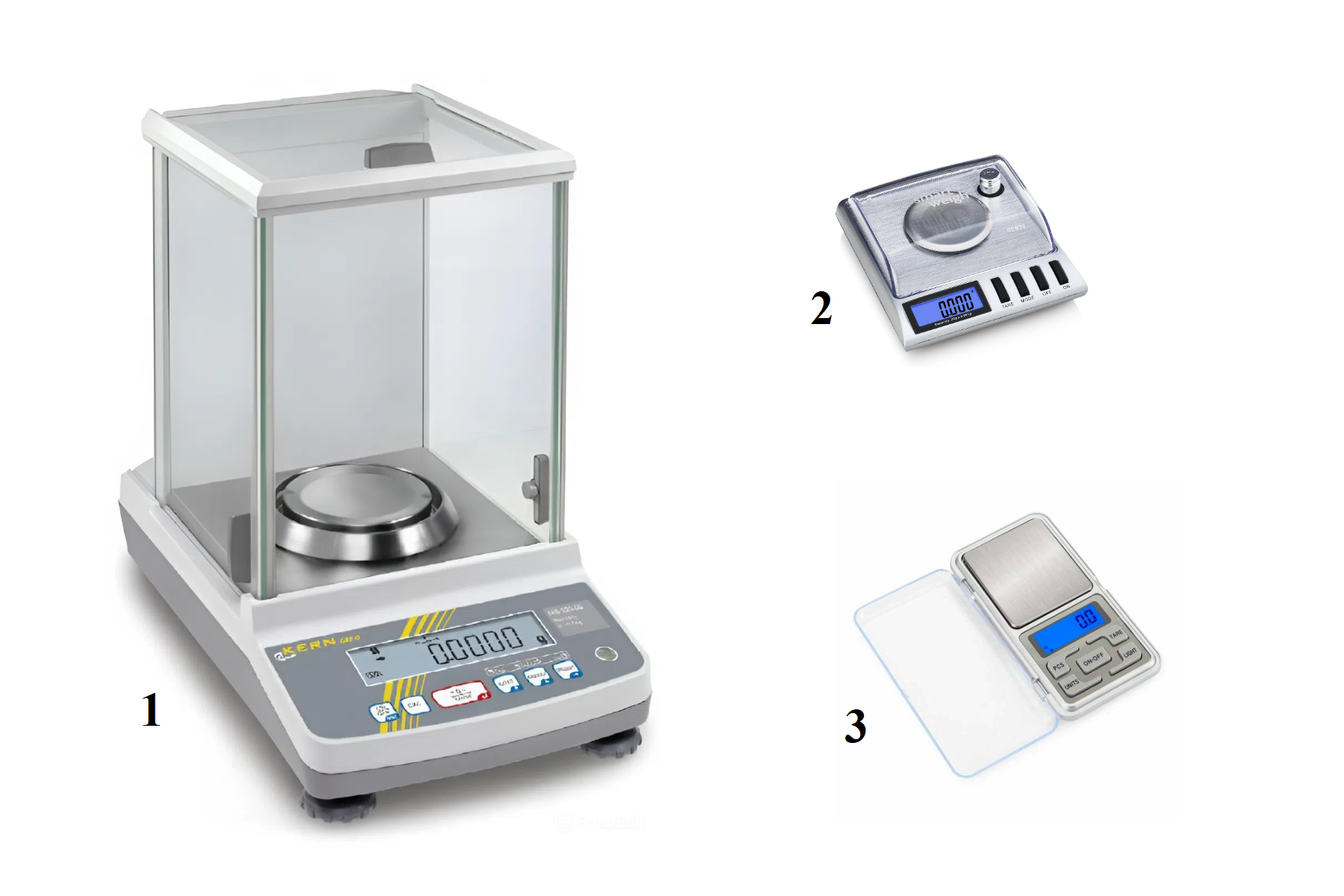
In professional settings, gemstone weight is measured exclusively using calibrated scales certified by OIML or NIST, with strict controls for temperature stability and level positioning. Some laboratories — including GIA — employ techniques to eliminate the influence of air, such as weighing stones in sealed containers.
Thus, measuring carats isn’t simply a matter of “putting a stone on the scale”, but a precise procedure requiring controlled conditions and specialized equipment — especially when it involves certified grading.
One-Carat Diamond Size: What Affects Its Diameter
When we talk about a one-carat diamond, it’s important to remember that carat refers to weight (0.2 grams), not a fixed size. A round brilliant diamond with ideal proportions typically has a diameter of about 6.4 to 6.5 mm [2].
However, two diamonds with the same weight can appear noticeably different in size depending on several factors:
Cut style.
- Ideal round brilliant (58 facets): 6.4 – 6.5 mm.
- Deep cut: appears smaller (down to 5.8 mm).
- Shallow cut: appears larger (up to 7.1 mm), though a pavilion that’s too shallow can cause light leakage and reduce brilliance.
Shape.
Oval, pear, and marquise diamonds tend to look 10 – 15 % larger than round ones of the same carat weight.
Proportions and craftsmanship.
Small differences in pavilion depth or facet angles can significantly affect how large a diamond appears.
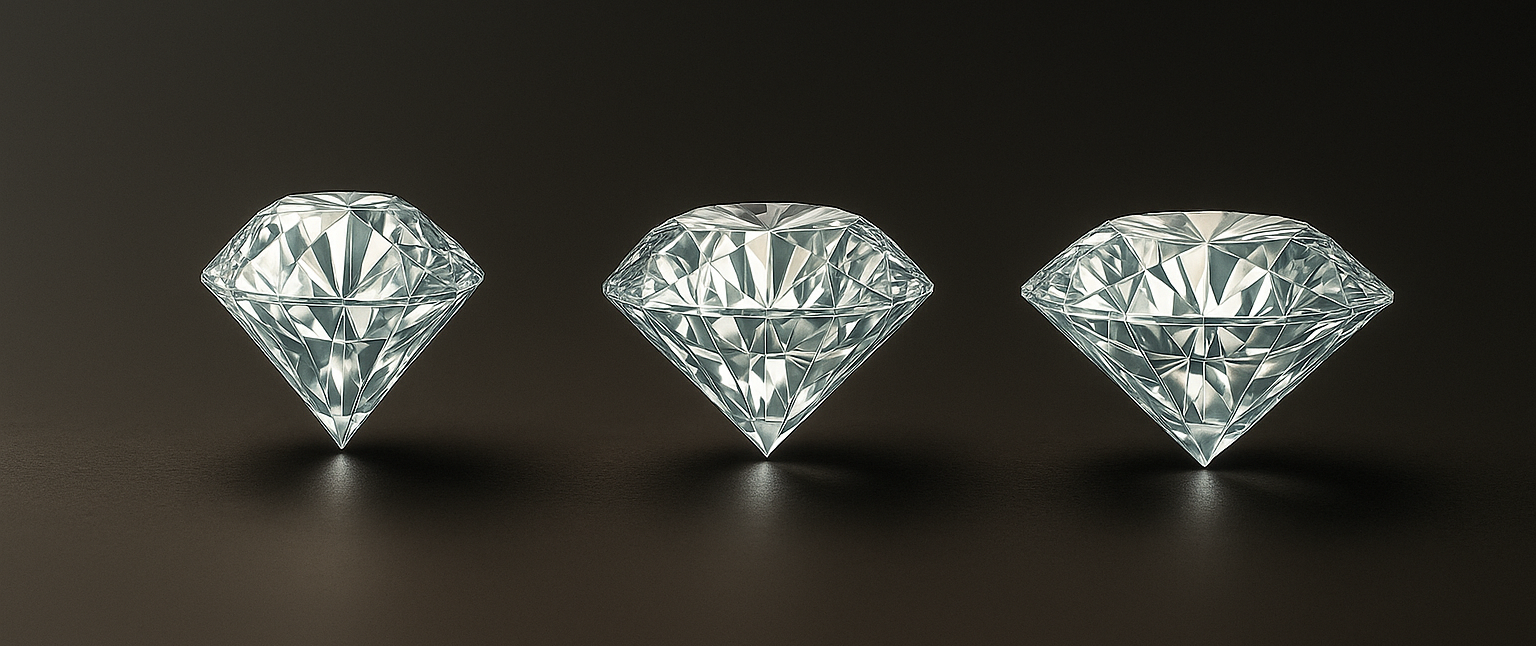
Why does this matter?
- When buying online, it helps you better visualize the actual size of the diamond.
- It explains why some diamonds appear larger than others, even when they weigh the same.
- It helps you avoid disappointment — a diamond may weigh one carat but still look smaller than expected.
When choosing a diamond, remember: true value lies not in millimeters, but in how the stone plays with light — and in the craftsmanship behind the cut.
Carat vs. Karat: Weight or Purity
As we continue our exploration of this small unit of great value, it’s worth examining an intriguing paradox: why does the same word refer to both the weight of a diamond and the purity of gold? This linguistic overlap is no coincidence — it reflects centuries of jewelry history.
The confusion may date back to ancient times, when merchants in Eastern bazaars used carob seeds for multiple purposes. On one hand, they weighed gemstones with them; on the other, they assessed the quality of gold coins.
In the Roman Empire, there was a gold coin called the solidus, introduced by Emperor Constantine I in the early 4th century. The solidus weighed approximately 4.5 grams and was divided into 24 parts known as siliquae [3]. Each siliqua weighed about 189 milligrams — roughly the same as a single carob seed.
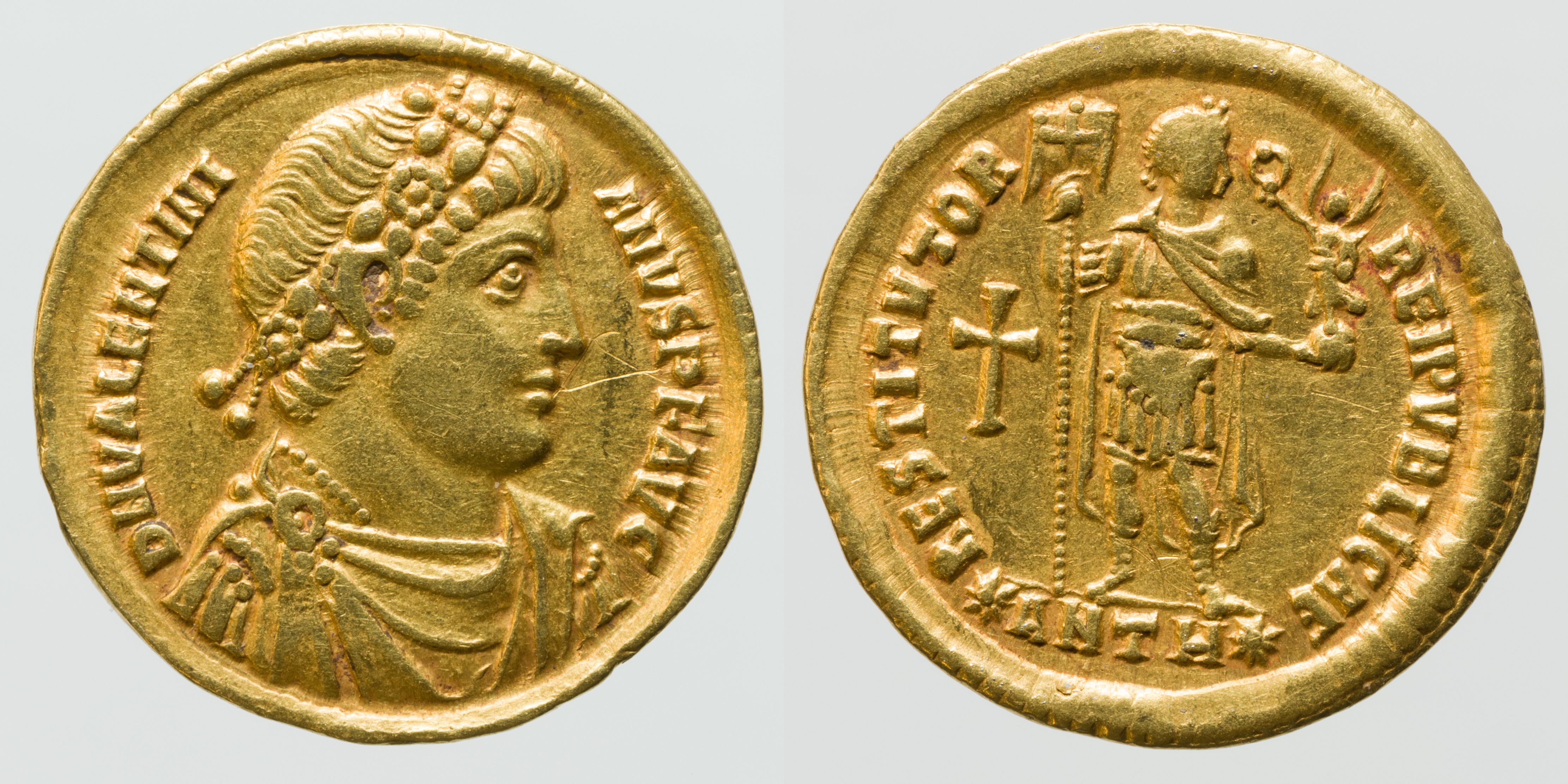
In Arabic sources such as those of al-Khwarizmi (9th century), the term qīrāt was used to denote 1/24th — a purely mathematical division, unrelated to the actual weight of carob seeds [4].
This division into 24 parts became the foundation for defining gold purity:
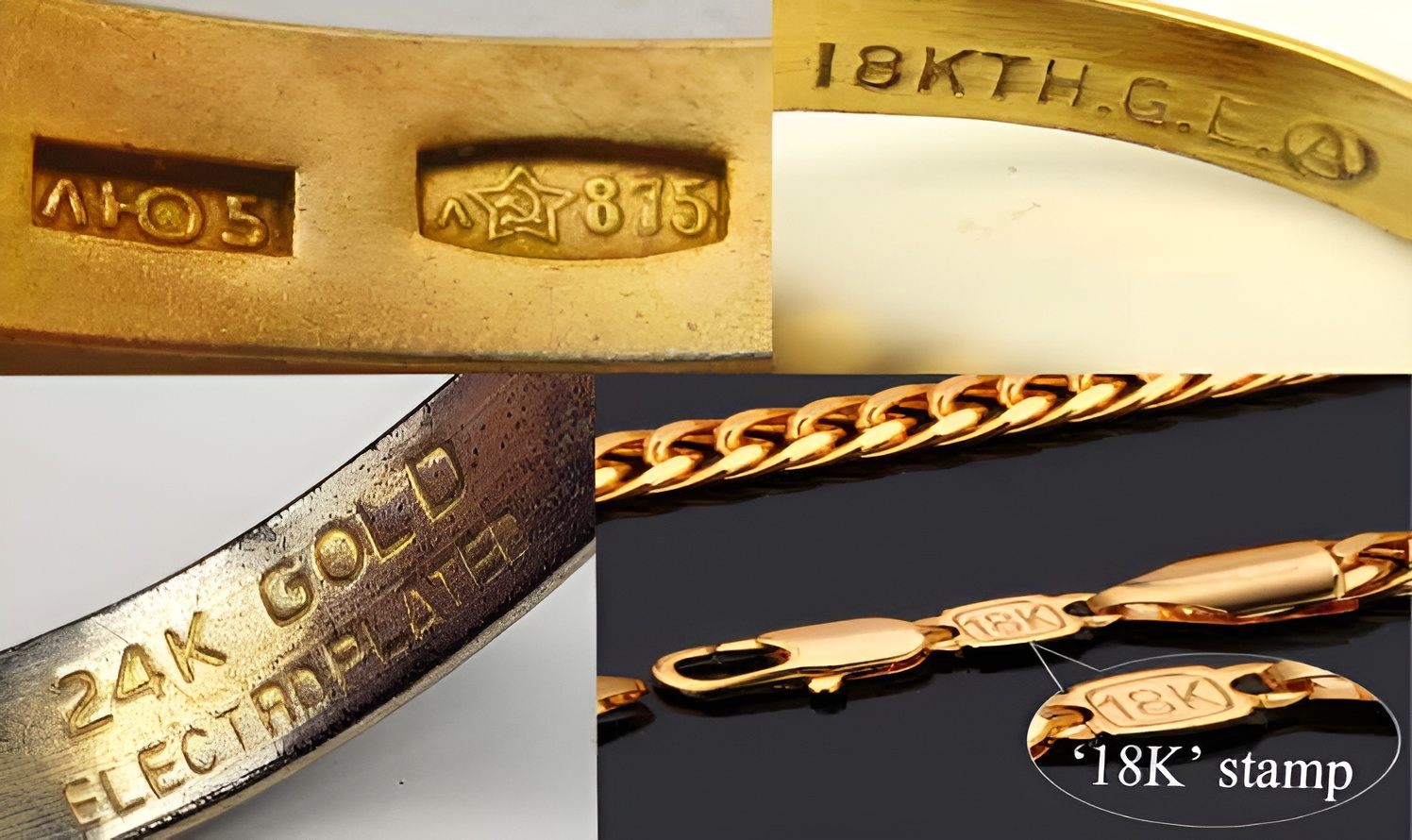
24 karats = pure gold
18 karats = 75 % gold
14 karats = 58.5 % gold
12 karats = 50 % gold
Today, the two systems have diverged but still share a common origin:
For gemstones (ct), the carat has remained true to tradition: 1 ct = 0.2 g — the approximate weight of a carob seed.
For gold (K), the karat has evolved into a precise mathematical measure: 24K = 99.9 % gold.
Interestingly, different countries handle this duality in their own way. In Europe, carat refers to gemstones, while karat refers to gold. In Russian, however, both terms are pronounced the same — which is why it’s important to pay attention to the notation: “ct” indicates gemstone weight, while “K” refers to gold purity.
What may seem confusing at first is, in fact, an elegant solution — a fusion of ancient tradition and modern precision. As it was centuries ago, the carat remains a universal language spoken by all who appreciate beauty — from ancient goldsmiths to modern gemologists.
Conclusion
The carat is more than just a unit of measurement — it tells a story of trade, science, and luxury. Today, the world of jewelry is unimaginable without it, and its origins continue to fascinate gemstone enthusiasts. Behind the simple abbreviation “ct” lies centuries of history: from ancient marketplaces and carob seeds to the ultra-precise analytical scales of the 21st century.
It has become the universal language of the jewelry world — recognized and respected across continents. The carat defines a stone’s value, rarity, and prestige. But more importantly, it gives the number 1.00 a deeper meaning: sometimes, a difference of just one hundredth of a carat marks the line between the ordinary and the exceptional.
Now that technology allows us to measure weight with micron-level precision, the importance of the carat continues to grow. It remains not only a unit of mass, but also a symbol of trust, refined taste, and investment-worthiness in the world of fine jewelry. And its origin — rooted in the ancient metaphor of nature’s precision — still commands respect from all who value true perfection.
References
No items defined
No items defined
